
Progress, Poverty, and Corruption
The greatest problem with the foundations of Economic Philosophy in western civilization

“Place one hundred men on an island from which there is no escape, and whether you make one of these men the absolute owner of the other 99, or the absolute ruler of the soil of the island, will make no difference either to him or to them” - H. George

The year is 1909. Henry George is the most popular economist globally. His book, Progress and Poverty, was talked about in every household, it captured the mind of almost anyone who read it. These ideas, being so popular, made it all the way to the houses of parliament. The changes he proposed inspired the creation of “The People’s Budget,” which was voted in by elected MPs. All that was left, was to get the approval from the House of Lords, and they’d be written into law. This always happened as the House of Lords were unelected and so to prevent an uprising and maintain their positions of power, they would go along with everything the government wanted. But not today. For the first time in 200 years, the Lords saw these changes as such a threat to their way of existence, that it was worth risking their positions of power to block these changes. What followed was chaos: a constitutional crisis as elected MPs revolted against the Lords’ abuse of power, and shortly after a world war which distracted the population. George’s ideas were completely forgotten about, absent from any future bills and silenced in the indoctrination education system. Since then, these ideas have been laying dormant. Absolutely no one has heard of Henry George or what he stood for. Only a few fringe weirdos, who spend all day reading about obscure things have any idea who he is… But what were those ideas? and why were they so threatening to the powers that be? Why did they risk their powerful positions to shut them down, and then spent the next 100 years completely eradicating them from the education system?
It’s because they solve this problem.
The problem is: Say we make a lot of technological advancements, the average person is able to produce orders of magnitude more than they were throughout human history. In this world, the average person should also have access to a material abundance which is orders of magnitude greater than his ancestors, right? This is exactly what has happened in the world, but do you think you have orders of magnitude more material wealth than your ancestors? Sort of, but not really. Yes, you have cool new tech like mobile phones, but if you want to have a house and feed a family of 5, now mum and dad both need to work, and they need to work more hours too! Furthermore, they don’t even own the house anymore, Granny and Granddad now need to gift them some money so they can just about afford a 10% deposit for a mortgage which they’ll then need to spend their entire working life paying off. They are living on the margin. So what’s been going on? Surely given the level of technological advancement, we should only have to work 2 hours a day to get all the same benefits we used to get for 20 hours of work a 100 years ago, possibly even more. Yet the opposite has occurred. Well, let me tell you, someone has been getting very, very fat, and very rich. Let me introduce you to:
The Land Monopolist.

Imagine you were able to make a 1 off payment to own something that was naturally created and provided to us by God (defined as something greater than us, which created us, and that we cannot fully understand or comprehend) for free and absolutely vital to sustain life, like say, the sun.

You now own the sun for eternity and national and global legal systems protect your ownership interests in this. Furthermore, and most importantly, you can charge people rent who would like to enjoy the suns rays. This sounds utterly absurd, and the suns owner would obviously get exorbitantly wealthy. Any increase in the productive capacity of individuals in this society, would be swallowed up by the owner of the sun in the form of increased rental fees for usage of the suns rays. If you don’t like the system, you are free to opt out and die, as the sun is vital for sustaining life. Otherwise, the suns owner is free to extort from you the maximum amount he’d like to. This tends to be so that you are left with the minimum amount required for the basic necessities of survival, so that you may continue to work and produce for the suns owner. Sound familiar?
This all sounds utterly absurd. But, this is exactly how land ownership works. You make a one off payment, and you now own this naturally occurring resource in perpetuity. The fact it is vital for survival, enables you to extort rent from people for its usage to the maximum degree you can, which tends to leave the average worker with just enough to survive and continue working, so you are able to get fatter, and richer, without doing any of the work.
The reason we don’t immediately see it for what it is, like in the example I gave of the sun, is because it’s ownership is far more dispersed. Furthermore, anyone who is smart enough to even partially recognize what’s going on is able to buy a slice of the pie, and get in on the action. They are then incentivized to maintain the system.
The people who are getting seriously screwed over by this situation, are the poor and middle classes, anyone that does not own Land. They don’t fully understand what’s going on, they just feel something is deeply wrong. The system is rigged, and they are not receiving the fruits of their labour. This is dangerous.
Lets get technical
Thus far, I have attempted to describe the need and reasons for an economic theory called Georgism using stories to keep you engaged and interested. However, now I have you hooked, it’s time to explore this theory in more detail. This is going to be more complex, you’ll need to re-read this part, go for a walk, and spend a bit of time thinking about it, and trying to disprove this model in your head. Believe me, I’ve spent hours trying to, and I can’t.
Definitions
The factors of all production can be split into 3 categories, which are used to produce wealth:
Land - Not just limited to the surface crust of the Earth. It encompasses the entire material universe outside of man and his products: rivers, the atmosphere, the sun, minerals in the Earth, Oil & Gas…
Labour - All human exertion in the production of wealth.
Capital - Capital is wealth used in the process of production.
Wealth - Consists of natural products that have been adapted by human labour to fit them for the satisfaction of human desires.
Land + Labour + Capital = Wealth
In reality though, there are only really 2 factors of production. The naturally occurring material universe, land, and the human mind, or physical exertion used to mould the material universe into forms which serve our desires, labour. Capital is really just a subsection of labour, that is used to aid it, so I am going to eliminate it from the equation, and hide it inside labour.
Land + Labour = Wealth
Whenever anything is produced, the profits generated are then split amongst their constituent factors of production
Rent - Is the share of wealth which goes to the owner of land for the use of natural capabilities.
(note - this is a very different definition to how the term rent is used today. If you pay your landlord “rent“ to use a house for a month. The portion of your rental payment which you are paying for the use of the unimproved naturally occurring land the house sits on would be included in George’s definition. The portion of the rental payment which is paid for the construction and usage of the physical building you are occupying would not be included in George’s definition of rent)
Wages - The earnings of labour — the produce that labour brings forth, which belongs to the labourer.
Interest - Is the portion of wealth which goes to capital because it aids labour in production. (Like capital, this is really just a subsection of wages)
The philosophy of ownership
Have you ever stopped to think about what causes us to feel like we own something? It’s a very innate instinct, take a child’s toy, and they go f***ing nuts. They feel as if they have been wronged.
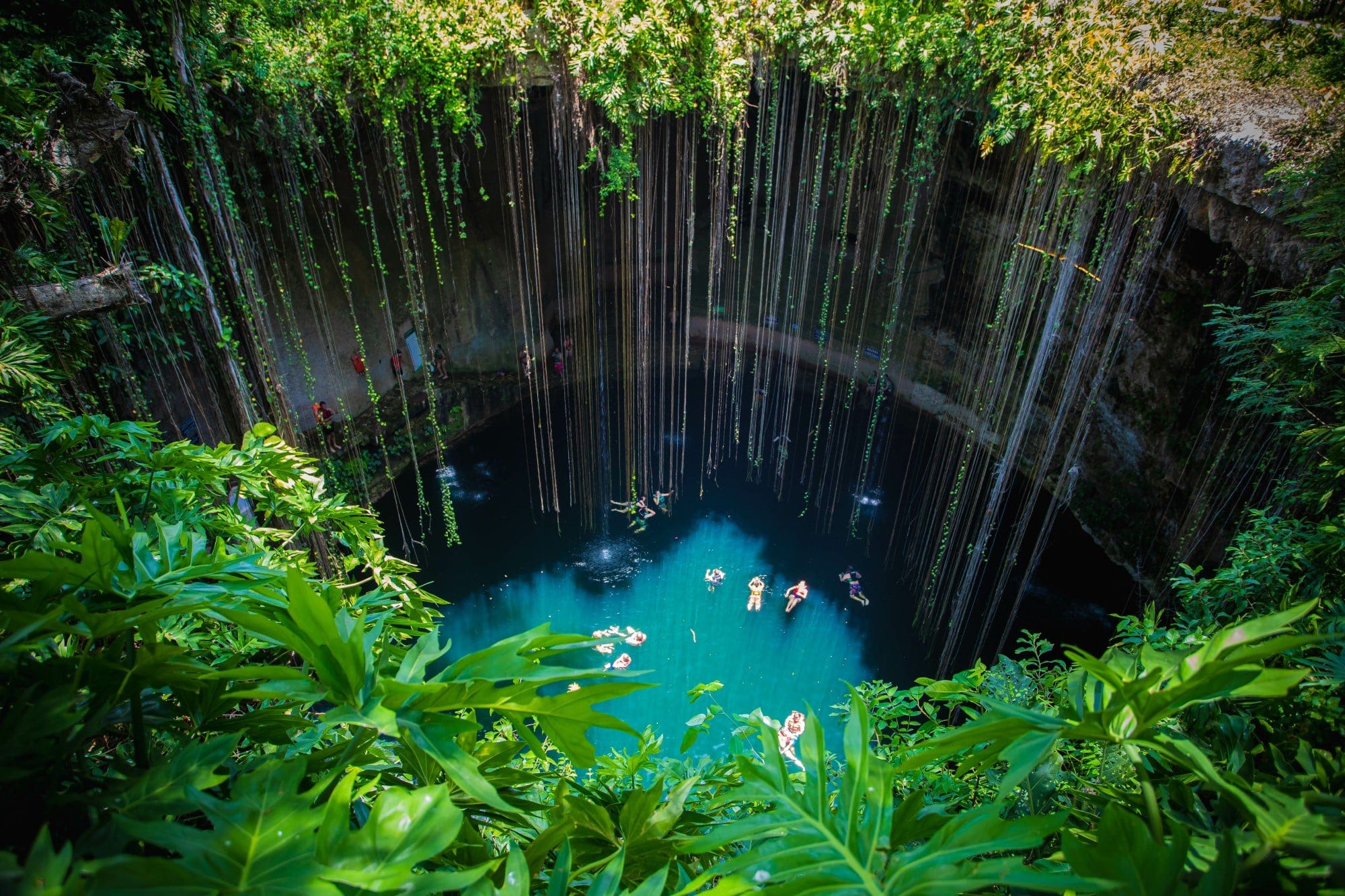
I had a very similar experience, I distinctly remember visiting a cenote in Mexico (it’s a naturally occurring pool like in the photo above). At the entrance, there was a slightly shorter than average man charging $200MXN to enter. I was absolutely livid. What gave him the right to claim he owned it? He did nothing to produce it, no one ever did, it was always there, naturally. How dare he claimed he owned it and charge me a fee to visit? I felt as if I had been wronged, there was a deep injustice. Weirdly though, I don’t get reaction when someone has built a swimming pool and charges me to enter.
This instinctual reaction is not just limited to me and toddlers though. If you look at almost anywhere where western civilization has gone, and set up a little office in the capital city, and given people little pieces of paper which supposedly give them the right to complete ownership of land, and all the rental income it will generate in perpetuity, this concept is met with utter fury from the locals. Look at the Mauri from New Zealand, all the Africans and the aboriginals across the Americas. All had no concept of private land ownership before, it was collectively owned, the natural bounty provided to us was to be shared.
I believe this to be the natural state of things.

BUT, I can hear you screaming, what about private property? free-market capitalism? This is socialism. Whenever a society has trended towards socialism it has caused utter disaster. Mao’s China, Lenin’s Russia, Starmer’s UK.
This is absolutely true and I am not going to strawman this.
For the best definition of free-market capitalism I’d refer to Ayn Rand’s Essay “What is Capitalism”
This is one of the most beautiful things ever written. If you haven’t already, read it. The average person having a well formed understanding of what capitalism is, is absolutely vital to the creation and maintenance of a prosperous society. It is no surprise at all, that when I visit any of the western countries which are currently atrophying, whenever I ask anyone, even the smart, what the definition of capitalism is, they spew out some verbal diarrhea which isn’t even remotely similar, and is often completely contradictory, to its true definition. Do not be one of these idiots.
To poorly summarize the essay for you: Free-market capitalism is a social system which recognizes the rights of individuals to their own private property, which they are free to trade voluntarily. The key difference between this and socialism/communism… is the word voluntary. The alternative is trade via force. Where voluntary trade reigns, the spoils go to the man best able to produce, incentivizing him to serve others. But wherever force is the primary method by which man interacts, to win, he must expend his energy not in serving others, but in becoming the most dominate force in a given area, so that he may take what others have produced. It is a race to the bottom.
Wherever these ideas have spread, voluntary trade leads to the creation of highly complex prosperous societies, and forced trade has lead to the decay and destruction of society.
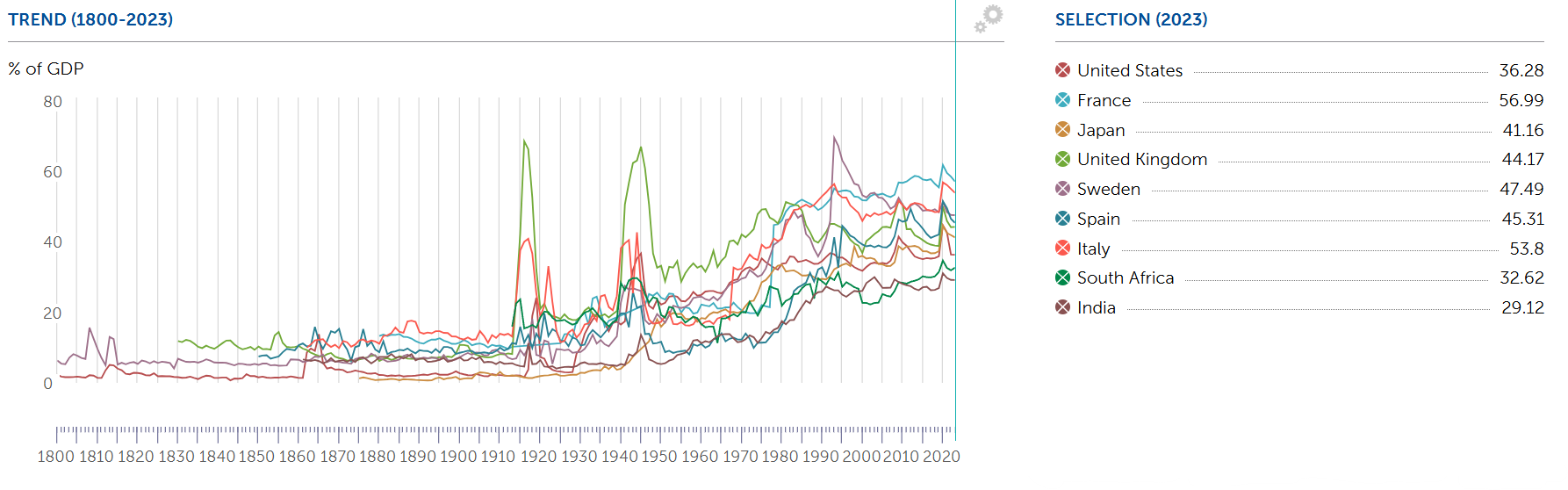
The biggest example of where forced trade reigns supreme is large, modern, democratic governments. All re-allocation of resources by current governments, is trade via force. What happens if you do not pay taxes? Your property is seized and you go to jail. Governments use their monopoly on violence in a given area, to steal the property of individuals living in that area via taxation. This can be done overtly, via income/corporation taxes, or more covertly like fuel taxes or money printing. Whichever way they do it, unless it is a voluntary donation, they are stealing what others have produced via force. They do not have to compete to be the best at serving you to earn your money, they just take it, and waste it. One of the best ways to measure the degree to which this is occurring is looking at government spending as a % of GDP (total spending). If you look at the above chart, this is roughly the degree to which forced trade has overtaken voluntary trade in modern economies. This is why your society is decaying.
So how do we unite these 2 ideas?
How do we combine this innate human response; that the complete ownership of naturally occurring land, granting the owner the ability to extort from the rest of the population the produce of their labour is wrong; with the ideas of private property, free-market capitalism, and voluntary trade, which have produced vast amounts of wealth wherever they have touched?
This is Georgism.
Remember the definitions of land and labour above?
Land + Labour = Wealth
The theory states:
Land, the naturally occurring material universe outside of the human mind and it’s products, should not be in the domain of private property. No one ever produced it, and so they have no right to claim dominion over it for eternity. It should therefore be publicly owned, and the rent received from its usage should be shared. The individual may rent it, enabling them to use it produce things, and the individual may own the improvements they make atop it. However, they may not make a one off payment, which entitles them to the entire stream of future rental income the land generates, granting them monopoly ownership of this vital factor of production for survival, enabling them to extort whatever they want from the rest of the population.
Furthermore,
Labour, the products of man’s mind and his exertion on the physical world, should be his, and his only, to trade voluntarily as he sees fit. All income taxes, corporation taxes, VAT.. should be abolished as these represent a forced confiscation of the produce of the individual’s labour.

Wealth - So say a farmer wants to use a field to produce some carrots, how do we deal with the profits generated from this? A portion of the production was due to the naturally occurring land, and a portion of the production was due to the farmers toil. how do we divide the two?
Simple, the field is rented to whoever is the highest bidder. If that’s the farmer who wants to grow carrots on it. The farmer will make a profit equal to the farmers ability to use the land and his labour to produce over and above what the next best able to produce would be able to do. If, one day, the field ends up being in the city center, the farmer will find he will no longer make a profit, and the land will be freed up to use for a school, apartments, a factory… This method ensures land will tend to be used for its most productive use.
Citizens Dividend - What would we do with all the rental income generated from public ownership of land?
There are multiple models for how to distribute the profits. My favorite is an equal payment to all citizens of a given nation called a “citizens dividend”.. more about this later.
Benefits
Land tends to be used for its most productive use
STOPS LAND SPECULATION - this is huge. People “earn” their entire living from buying up plots of land, renting them out for 10 years, or even worse, just holding them vacant, and then selling after the value has risen. They’re capturing most of the gains from the increase in productivity of humanity, without actually doing any of the work to produce this.
Consider this, the brightest minds of our generation have been incentivized to just buy up land and hold it, rather than do something productive with their lives. Imagine how much better we’d be if the best game in town was just to work out how to produce more.Furthermore, this would also immediately eliminate the housing crisis. This speculation pushes up housing costs to far greater heights than what they really should be as it restricts available supply of land, and because purchasing land grants you ownership of all future rental income it receives. All unused or inefficiently used plots of land which land speculators have been hogging in highly sought after locations would be freed up so that more housing can be built. The land market would be freed up to competition rather than held back so you can be extorted.
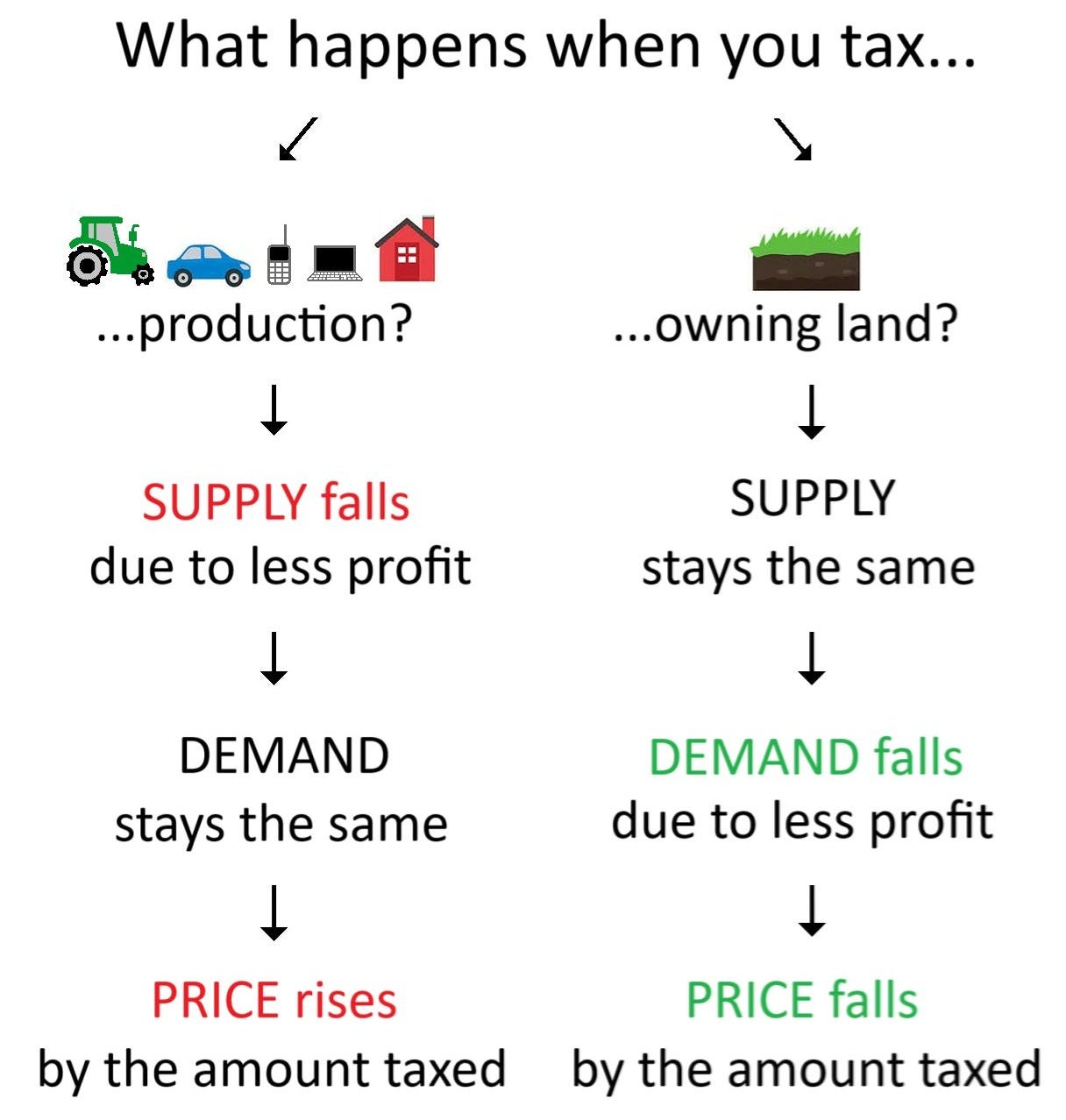
Taxing land instead of production incentivizes production, whilst leaving the supply of land constant. (The terms land tax, rent, and economic rent are all used pretty much interchangeably in this article and in the literature about this subject)

Graph copied from fellow Georgist Tim Crinion on twitter, go and check him out! @timcrinion Almost complete annihilation of tax bureaucracy. Think of the amount of time just you individually have spent trying to understand the tax rules, working out how much you need to pay, paying it, applying for tax re-bates, filling out mountains of paperwork.. Now imagine how much time every complex business spends doing this. All of this non-sense is clogging up the arteries of production. We can just eliminate it all. We’d have so much more time to spend on actually producing things! All accountants would be gone!
All that would remain in it’s place, would be 1 organization to assess land values, and collect the rental income associated with each piece of land. Much simpler. You wouldn’t even need to report how much income you make, or profit your business generates (unless its publicly traded).
Problems
Implementation - The biggest problem I have with this theory is the practical reality of how to implement it. For instance, the best model I’ve seen for how to do this is called the Citizens Dividend. In this model, everyone pays their rental fee for usage of land, also called a “Land Value Tax.” Once collected, the income generated is then re-distributed equally amongst the population in the form of a payment to each individual, a “Citizens Dividend.” I like this, as it means all of the left wing idiots will stop complaining about there not being a safety net, as one is provided, but it’s not provided in the form of government inefficiently providing bad services, paid for by stealing the produce of other people’s labour who largely don’t even use the services. This way, people can still chose which school to send their kids to, and which hospital to provide medical care for them. Providers of these goods and services will then need to compete to be the best at providing them, so they won’t be rubbish anymore.
The big problem I have with this though, is that it made more sense during the industrial revolution, when people largely spent and lived their entire lives within the confines of a given country. Now, we’re now in the digital revolution. The trend is, people are increasingly spending their time in cyberspace and hopping from country to country like lily-pads. For instance, why, as a British Citizen, should I be entitled to receive the income from all the land controlled by the British Empire? (if we can still call it that) When I spend most of my time outside of England, in Paraguay.. why shouldn’t I be entitled to receive some of the Land tax generated in Paraguay when I’m spending most of my time there, and paying my share of the Land taxes generated in Paraguay? The philosophically correct way to solve this problem is that on some level we should have a global land tax collection authority, which would then re-distribute a portion of the income received evenly amongst the entire population of the planet (A portion would also be collected and re-distributed locally to incentivize taking care of your local area).
Firstly, I think we’ll struggle to get Kim Jong Un to sign up for this. But even if we were able to get all the countries on board, the risks associated with having one governing body to collect and re-distribute the rental income received from all land on earth, and even in space, would be so great, that even if philosophically correct, I don’t think it’d be worth doing. Even on smaller scales, having a governing body collecting and re-distributing money has consistently proven itself to be a disaster for the efficient and just allocation of resources. However, the Citizens Dividend is fundamentally very different to how government functions nowadays. Instead of the government deciding how to waste the money, it is automatically re-distributed to citizens equally, and so I think on smaller scales it would work. It’s just a little difficult to say exactly who’s entitled to a citizens dividend, and should the amount they receive be proportional to certain factors.
Corruption
Legal & Taxation system
It’s hard to say exactly when democracy was born in the UK, it was a slow evolving process from the creation of the Magna Carta in 1215 up until today. What we can say for sure though, is that during democracy’s infancy and well into it’s adolescence, from the 13th to the 19th century, those that were permitted to vote were exclusively the land owners. This was a period in which English common law was formed, and then spread to the rest of the globe.
Now, do you think these landowners were voting and constructing the legal and taxation system with the best interests of society in mind, or to protect and further their own interests?
The answer is obvious. You can see it in the results. Land ownership has been protected by law to the highest degree possible and there are no taxes on it (we do tax buildings built on land, this is easily confused with, but actually very different to taxing the land itself, as buildings are something someone has produced). Furthermore, your property rights to the products of your labour, have been almost entirely excavated. Look at the amount of tax you have to pay when you start a business or get a job to earn a wage!
Banking

If you have ever had a conversation with me, you will know, I hate the banking system. It is a complete scam from head to toe. The level of distortions it creates in the price of goods and services, along with the unjust re-distribution of capital it perpetuates… the magnitude of this beast is truly difficult to comprehend.
Given our newfound understanding of land ownership, we can now look upon this ogre in a new light, and gain a greater understanding of just how ugly it is.
The banking system, which I believe was set up by the landowners for the landowners, has basically just been a method by which a privileged class have enabled themselves to steal from you, to buy up more land, so they can extort an even greater proportion of the produce of your labour from you.
How is this done?
The banking system uses a fake money system. No work is done to produce the money, originally they just had to print a few notes and voilà! new money is created. Now all they need to do is just click a few buttons on a computer and there it is. The problem with this is that when you can so easily create money like this, it devalues all the money that individuals had to work to earn. You are in effect stealing from the produce of their labour. Just in such a covert and incremental manner, that they do not recognize. Yet you look at the amount this has been done throughout history, and the amount which has been stolen is unimaginable, its tantamount to the greatest crime in human history.
Most of this money creation is done in the form of mortgages. When the bank gives you a loan in the form of a mortgage, this money is created out of thin air. This is stealing from the rest of the population who holds the currency. You can then use this mortgage, to buy a property and the land it sits on. You then make an enormous profit from the land appreciating in value while your loan, the mortgage, decreases in value as interest rates are artificially suppressed and the valuation of the monetary unit is disintegrated by more money printing.
You can then use your profits, to take out more loans, buy up more land, and expand the empire.
This is how you get extra-ordinarily wealthy, without doing anything productive. If you’re interested in doing this, look up something called the 18.6 year real estate cycle to ensure your timing is correct.. It was recognized the speculative bubbles which accompany land market speculation follow regular and repeatable 18.6 year booms and busts. The last bust was 2008, you can work out when the next one should be.
Just know, you may gain incredible amounts of wealth doing this, but you will not gain respect from your fellow citizens. They know something’s up, they intuit that your wealth is a fraud. Instead of being a testament to the work you have done in serving others, it is a stain, it is the proceeds of a dark magic used to take advantage of a corrupt system. They know this, they just cannot fully describe it, yet.
Consequences

Reform UK, are quite obviously, currently the best candidates for next election. They will make some progress in reducing the bloated size of government, and it’d be nothing short of a revolution for UK energy policy. The problem is though, their treasurer is a property tycoon, and no where in their “contract with the people” or in their interviews have I heard them speak about this Land monopoly issue I’m talking about. They will do a lot to solve some of the issues the UK is facing. But this is one of the deepest, and they are completely unaware of it. As a result, the rewards of the economic growth this new government will bring about, will not go to those who produced that wealth. But it instead will go mostly to the land monopolist, who through no labour of their own, will maintain their long standing position of ruler, and you are the serf.
The lower and middle classes will still be living on the margin, any increase in wages Reform would bring about would be swallowed up by increased rents. Also, please recognize, increased rents don’t just affect the cost of renting a place to live, it increases the costs of all goods and services you buy, as these all require land usage to function.
It is the same story anywhere in the world, it doesn’t matter who you vote for, rents will adjust so the average person is still living on the margin. All of the gains from the increased productivity of humanity are soaked up via the land market.
Artificial Intelligence
I’ve heard many people in real life and lots of very intelligent people in podcasts sh**ing themselves that artificial intelligence will take away all our jobs and we’ll be left destitute, or maybe they’re on the other end of the spectrum and they think it will produce a material abundance like nothing ever has before. Yet, through this framework, we can tell exactly the effect artificial intelligence will have on our working lives and wealth distribution.
Artificial intelligence is, and will continue to be, revolutionary for productivity. The average person will have at their fingertips the power to do so much more than ever before. The amount the average worker will produce will be difficult to imagine. But where will the benefits of all this go? The landowners. If wages go up in real terms, this will just give the landowners permission to charge more rent. There will still be jobs, but the average worker will continue to make just enough for food, shelter and the basic necessities. I cannot imagine how wealthy the landowners will be though. Furthermore, I don’t expect the benefits to flow to NVDA holders or any of those other tech companies, these are deeply competitive industries and the margins will compress and just as much money will be lost as has been made on the way up with all this hype. The Power is in the Land.
One thing I would add though, is that the transition from the industrial era to the digital age has changed where land values will increase. Countries which dominated during the industrial era were those where governments were able to keep the place secure, and uphold legal contracts. It didn’t matter so much if the government increased taxes, the benefits from economies of scale from building industry in close proximity were so great it would outweigh the benefits of moving to a lower tax jurisdiction. The game is very different now, it’s now very easy to move, capital is increasingly online or mobile, and digital businesses often benefit from dis-economies of scale. If you want to be successful, you pretty much have to move to a low tax jurisdiction, as the same business in a high tax jurisdiction will not be able to compete with one in a low tax jurisdiction which is still able to maintain law and order. This is where capital will increasingly move to, and it is therefore also where land values will increase the most. Safe countries, where the legal system is upheld, and government interference and taxes are low.
Final thoughts
The factors of Economic production can be split into 2 all encompassing categories: Land and Labour.
We should share in the bounty of resources provided naturally to us by nature.
But we should fiercely protect the property rights of those who have worked to produced something of value.
Instead, we have fiercely protected the property rights of naturally produced resources for an elite class, the Landlord, who is able to gain significant wealth by producing nothing. They have consolidated their positions of power by becoming deeply entrenched in political organizations so that the legal, taxation and monetary systems are created and maintained for their benefit.
Meanwhile, we have disintegrated the property rights of the productive class. This has been done covertly via extortionate tax rates on what you have produced and what you consume, then you are held to ransom for whatever is left over if you want somewhere to live.
This must end. It is deeply de-stabilizing and unfair. I think we all feel that, but do not have an accurate understanding of why. Blame has been thrown around almost everywhere except at the source of the issue:
The rental income generated by naturally occurring land should be shared, the wages generated by your labour should be yours, and yours only, to voluntarily trade.
Please like and share, I put a lot of effort into this and I think the information inside is quite important.
Extra Reading
If, like me, you read these ideas and see that they are absolutely revelationary. Then I would highly encourage you read more. There’s a reason these ideas have been silenced, and you don’t hear about them at all in school or university. It’s because the public having a good understanding of this, is the key to bringing these ideas into fruition. Sadly, and this is why the current system has been maintained for so long, the only ones who do understand how it works are the land monopolists themselves. And guess what? They could not be more heavily incentivized to maintain the system as is. Their way of existence and status depend on it. And as we’ve seen, they will fight for it.
It’s great that you have read the entire article and got to this point. It shows you have an interest, and if there is a public debate around this topic you’d be more likely to endorse it. But we really need people, who by the power of voluntary persuasion, are able to convince others that this is the way forward. For this, I think it is necessary to understand these ideas 10x more than the amount required to just merely be convinced of their merits. You must be able to, on command, fluidly produce the logical reasoning for why we should undertake such a dramatic change in our economic system. This is why it is vital you start to do the extra reading to gain that understanding, and then practice your ability to convince others via discussions with those around you.
Furthermore, you probably still have questions about the intricacies of how this economic theory would work in more detail. This article was already massive, and I couldn’t address everything. If you do still have questions, please drop a comment below, but also the answers will most likely be found in these books.
Here’s a short overview of the literature:
Progress and Poverty, Henry George
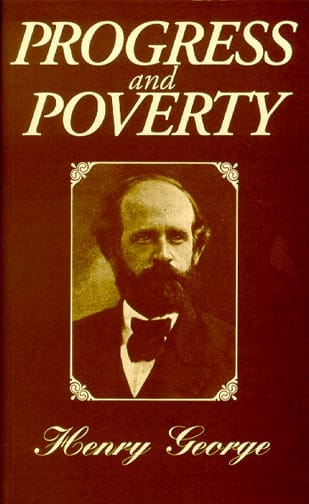
This is the Grand-daddy of them all. I believe this to be one the most important texts written throughout history. Henry George was the first one to put pen to paper and elucidate these ideas. This is an absolute must-read and will provide the in-depth philosophical reasoning for this economic system.
The next few books are more focused on the real-estate cycle. They were all heavily influenced by George’s original work and will help you enormously with navigating the current economic system.
The Power in the Land, Fred Harrison


The first contributor of the modern era. Fred Harrison’s book, is probably the most meticulously created.
Also, listen to this great short speech by Harrison recently.
The Secret Life of Real Estate and Banking - Phil Anderson
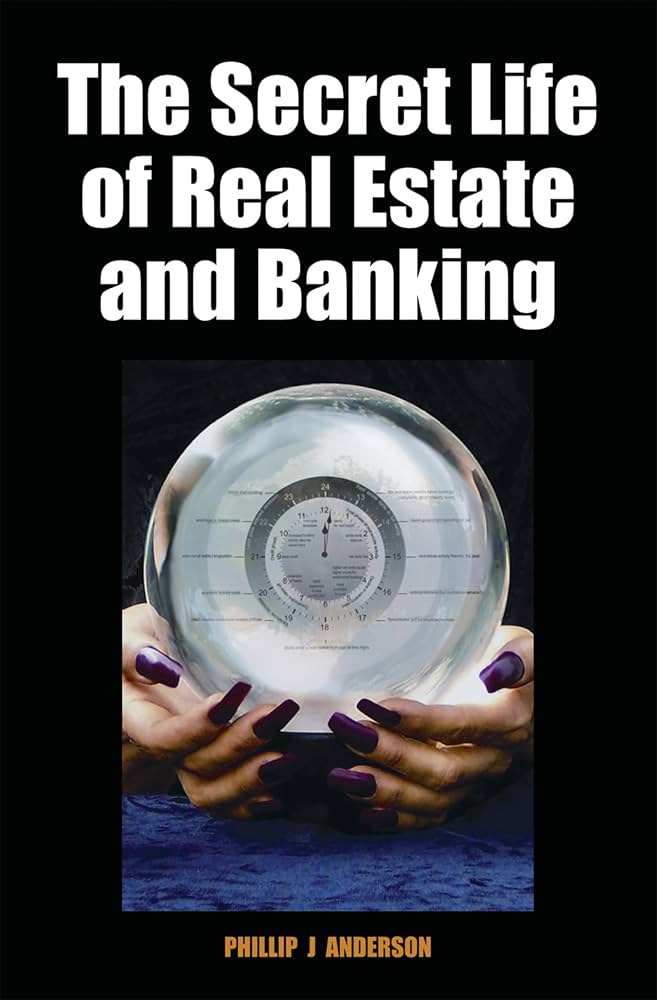
This podcast with Phil was actually where I first head about all of this. Phil is probably the most well known proponent of George’s work nowadays and the creator of the citizen’s dividend e-book. He is therefore, a legend.
The Secret Wealth Advantage - Akhil Patel

Probably the most easily readable and entertaining of them all. It’s my first port of call whenever I try to introduce anyone to this universe.
All of these men are heroes. This article was created by reading and synthesizing all of their work with the aim of creating something which is shorter format, and hopefully more easily accessible to the average person.
Very interesting!
It reminds of how many countries regulate mineral rights: You apply for a tenement or claim and this gives you the right to search for minerals. After a few years, you have to either give back some of the claims or continue to spend money on the claim. This way, no large company can have all the claims.
It also means that if you find something via the use of your labour and capital, you can keep a certain area (that usually turns into a mining concession), so that you can earn the fruits of your labour.
I think your proposed model is something similar. 👍🏻
Great read man, thanks for this. Let's see...
If you want to be in the system and support it, land is expensive. If you do not wish to support it and live outside the cities, it's pretty cheap. It's just that noone wants to do that. And so there is a price if you want what everyone wants, downtown NY or whatever. In every country I can think of there is cheap land ready to be developed if one is willing to move and live outside the mainstream. Decentralised communities in the Chaco for example. Land there is $2k/hectar.
I think people still keep the fruits of their labour if they a) work for themselves and b) pay 0%. The bully is the government with the taxes and obviously the corporation that you gave your life and labour fruits to. So I think even if we had the land tax economy, as long as a person is willing to give his creativity and work to someone else that exploits him (big corps), we'd have a similar problem.
"Capital is really just a subsection of labour, that is used to aid it, so I am going to eliminate it from the equation, and hide it inside labour." --- I think this is too simplistic! The book was written in 1909, back then land and capital had a different meaning. Today, land is increasingly also in cyberspace for example. Land on the platform - by scrolling you're doing labour for free, creating datasets for the owner of the platform who owns that cyber land. Yanis Varoufakis speaks of this. Cyberland is eating the production share of the physical land which is not in the equation. Secondly, capital changed a lot since 1909 - money printing. ROI on capital is much higher than ROI on labour, especially since the rise of internet. So just the land tax theory isn't enough, we'd need to fix the money.
"Look at the Mauri from New Zealand, all the Africans and the aboriginals across the Americas. All had no concept of private land ownership before, it was collectively owned, the natural bounty provided to us was to be shared."--- well, it was not collectively owned. It was owned by the most brutal agressor group of people in that area. And within that, the leader of the pack to decide what to do with it. And secondly, they didn't care about owning it because they'd exploit the area for resources (food) and then move on. So there was no need to own it.
"Simple, the field is rented to whoever is the highest bidder." --- obviously here you need to explain in more detail how this works, it's too simplistic. I will not start something, invest, if someone can just outbid me one year later. Not possible to plan long-term which is the bedrock of everything meaningful. How do you solve that?
"People “earn” their entire living from buying up plots of land, renting them out for 10 years, or even worse, just holding them vacant, and then selling after the value has risen. They’re capturing most of the gains from the increase in productivity of humanity, without actually doing any of the work to produce this." ---
a) someone buying the land means someone wanted to sell it. The seller got exit liquidity that he needed/wanted at the time, more than the land. The buyer got rewarded for his 10 years of waiting. It's like saying traders or professional poker players have no value - they do, in providing liquidity when there's noone else to do it. To me it's the same with the land holding.
Also, in real terms, gains aren't big for the landowner in theory, because they can't be, in brief simplistic way:
real (inflation-adjusted) land and house prices cannot outrun real income growth indefinitely, because eventually the cost of shelter would swallow all of household income. If growth compounds, 1 % real doubles the price in ~70 years—roughly two generations. Households can still cope with that pace because real wages also tend to grow (and because older owners trade down or bequeath). In the long run, land rent is ultimately limited by the surplus left after paying for labor and capital. If land keeps grabbing a bigger slice, people leave, birth rates collapse, or political pressure builds until prices correct.
"Furthermore, this would also immediately eliminate the housing crisis. This speculation pushes up housing costs to far greater heights than what they really should be as it restricts available supply of land. All unused or inefficiently used plots of land which land speculators have been hogging in highly sought after locations would be freed up so that more housing can be built. The land market would be freed up to competition rather than held back so you can be extorted."---
The housing crisis doesn't come from expensive land but government interventions like not issuing permits, forcing special types of buildings, killing construction company competition, etc. So the land tax doesn't fix that, just scrubbing the gov does.
"All that would remain in it’s place, would be 1 organization to assess land values, and collect the rental income associated with each piece of land." -- why would you need that organization to assess land values???
"For instance, why, as a British Citizen, should I be entitled to receive the income from all the land controlled by the British Empire? When I spend most of my time outside of England, in Paraguay. why shouldn’t I be entitled to receive some of the Land tax generated in Paraguay when I’m spending most of my time there, and paying my share of the Land taxes generated in Paraguay?" ---
Well, a) if you're getting your share in the UK and not in Paraguay it balances out in general, you don't need to change it. And b) you should get the UK citizen dividend because you are British, i.e. representing the country and your values/culture by being who you are, wherever you go. Now, if someone has two passports, that's also fine, as long as the countries are giving out passports only to people who become integrated into their culture (live there long enough to speak the language well, understand traditions and practice them, etc.). That way people could only have like 4 passports max in their life if they really lived 10 years in each country.
Cheers!